Featured

Sophie Lucas Writing

Photo by Burst on Pexels.com

The work I have gathered this semester is representative of the writing development I have undergone. These assignments presented in this portfolio show various different social topics I have zoned in on for the larger papers. These essays helped me develop my voice and establish the kind of writer I want to be. First, I included the minor assignments which introduce readers to the kind of writer I was at the beginning of the semester. This is followed by research and classroom notes I had taken over the past few months. The culmination leads to the final draft of my documentary analysis which I rewrote. 

The selection process was pretty simple because I knew what kind of process I wanted viewers to get out of my portfolio. I wanted to show how a process from one point to another can lead to a huge improvement. The first two assignments basically gave a sort of background for the blog. The notes and research following minor assignments captured the  work I put in for the class. I wrote thoroughly and focused on my prose. This all leads to the final of one of my documentary analysis which I redid. The prose was initially awkward and stilited. It was not refined. I went back to polish some of the run ons or typos that prevented it from being fluid. I wanted to show a more clean piece as a final. This final demonstrates my best work over the semester, especially since I went back to touch it up. 

Minor Assignments

Writing Experience 

In my high school experience, I often wrote pieces that were limited to required assignments handed out by teachers. This animosity towards writing was not always the case as I developed a deeper appreciation for it by my junior year. It started as a fluke elective class that encouraged writing in ways that I was never open to.  

Photo by Pixabay on Pexels.com

I needed an elective class to fill out my required seven courses for my high school. As I skimmed the pink sheet with faded blank ink, I narrowed down my options by putting a check next to a creative writing course. That writing course did not seem like a big deal at the time so I forgot about it until months later when I would walk into a computer lab with twenty other bright students ready to dish out work that was never asked of us. 

As the first day of junior year rolled around  computers laid before me I couldn’t help but feel apprehensive about the class, I chose to sit in for forty minutes a day for the next year. No one had ever asked me to write creatively and suddenly there was a teacher in the front of the class putting words on the board and asking everyone to write whatever they wanted if it fit with the words on the board. 

For the first week I just sat there as new assignments poured out and I couldn’t come up with anything. The list of work was becoming longer, and I still hadn’t written a thing. The blinking space bar on the white page flickered at me constantly as I tried to spark any form of words to string together. My teacher at the time had taken notice to my lack of typing, while everyone around me had seemed to have gotten in the flow. I spun in my chair back and forth swinging my legs when Mr. Griffiths and paused next to my computer pulling off his glasses. He glanced at my computer and told me to just write and walked away. 

I always assumed I needed an idea before I ever thought of putting words to a page, but with such a direct instruction I glanced at the board and looked at the title of the first assignment. The words read in the quiet night of Japan. I paused. I started typing a terrible poem, but it encouraged me through the rest of the year to start writing the first thing that came to mind. There would always be time to rewrite later but if I never start writing then I would never having anything to prove that I put in the work and tried. All I needed to do was write, and halfway through the year I enjoyed every assignment I did.

Photo by mentatdgt on Pexels.com

Style Rewrite 

Rewrite of Text 3  using Text 1  

The main character of the disastrous move Dune, Paul, goes through a series of missteps all in the vein of attempting to emphasize the journey of some sort of religious awakening. From what I could gather,  David Lynch tragically attempted to put an intense journey of faith on screen. Unfortunately, we ended up with a hot mess of weak dialogue and stilted acting. No one seems to understand exactly what is going on. Any attempt to give  meaningful religious undertones were completely shot. Paul is a weak character to watch it’s almost painful to watch the desire for anything smart to come out of this movie. The intent clearly warrants a debate on Paul’s supposed awakening but no one will actually spend enough time invested in the movie  to warrant this discussion. 

Justification: 

 I changed the tone of the text to appear more casual to the reader. In my rewrite, I wanted my voice to seem closer to that of a confidant or friend explaining the conflicted journey that Paul goes on. I wanted his argument to appear easier to understand with less academic word choice. The initial text for text 3 was very scientific in its analysis of Paul, by using text 1 the word choice shifted to being less sophisticated. I also used negative words surrounding the movie because text 3 does not address their opinion of the film while text 1 completely reviews it. The decision to address the religious undertones of the movie but insist on it not being debated felt necessary because text 1 is much more informal. The informality of text 1 allows my rewrite for 3 to be looser because it is addressing moviegoers instead of other academics now. Since I can express my dislike of the movie, it’s clear that the author won’t actually go into the religious or scientific journey that text 3 describes. I also wanted the hatred of the movie and characters to be clear. Text 1 does a good job expressing their distaste for the movie, so having text 3 express that too seemed essential. The lack of complex words also makes the text more accessible. A lot of the changes ended up making me talk more about the opinion of what was going on, rather than any factual analysis. This helped create a clearer voice than the removed one from the initial text for 3. It was most important to make the voice more personal.

Photo by Pixabay on Pexels.com

The class helped develop my rewriting skills. A lot of the times, before I had this class, I would write a single draft in a sitting. I would believe this would be my best work and I would just skim over the sentences checking if there was any obvious mistakes. Now, I spent more time with a paper because this class taught me how key drafts are to developing ideas. Papers should be started much earlier because there needs to be time in between checking and reevaluating work. Time is the best asset for writing because living with a paper longer gives more time to weigh new ideas. Some ideas may not fit. Also, editing is crucial and there needs to be enough time to give it the attention it needs. Writing both the essays helped me learn to write when I felt like I could not. They taught me that I just need to start writing and then the ideas and enjoyment during the process will start to happen during the process. 
Sophie Lucas Writing

Final Draft:

In all, my writing this semester has made me  much more excited for scholarly work. I used to not enjoy writing topics that were so formal but I have found joy in writing papers that interest me. When I enjoy the topic then I can give much more myself and my own thoughts to my paper, leading to a more enjoyable paper for me and readers. At the start of the semester I found writing difficult but manageable, but now I find myself anticipating getting better at it.

Documentary Paper:

America Divided 

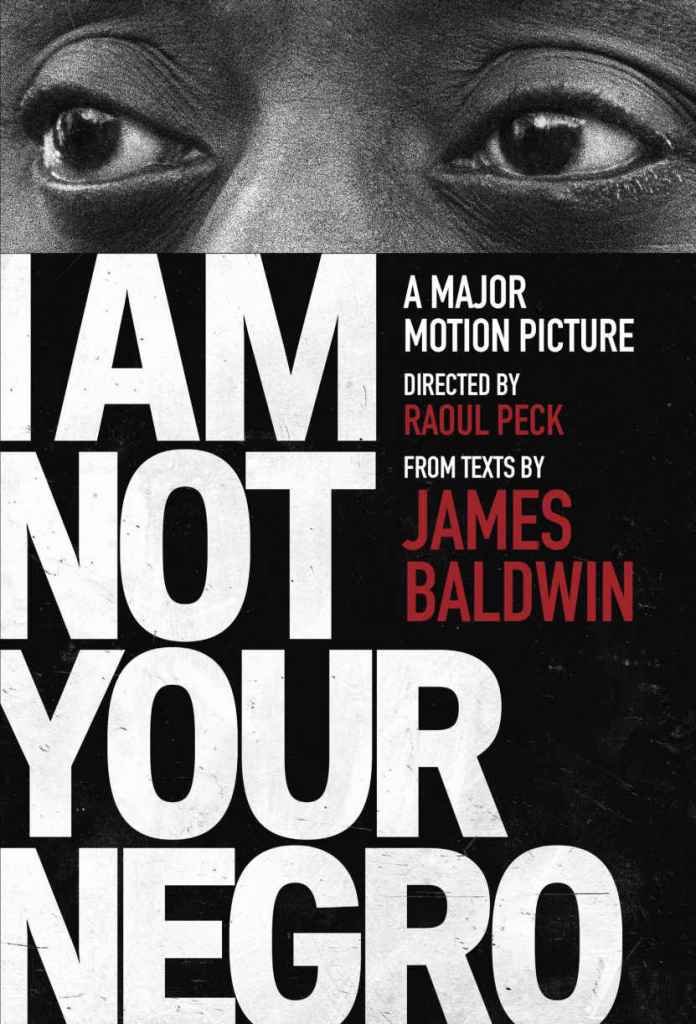
The film I Am Not Your Negro studies the complexities that circle race in America. Raol Peck, the director, uses James Baldwin’s last manuscripts to study how race is morphed into a topic that divided the nation and how white America refuses to acknowledge it. Baldwin’s manuscripts reflect on a complicated time period by using three different prominent figures to address how they all attempted to combat racism. Peck presents the manuscripts to a modern-day  audience and context by forcing viewers to feel unsettled with the lack of advancement towards a more equal society. He uses tools such as narrated dialogue and images to tie past events to the present day, helping to persuade viewers to open up emotionally to the film. These techniques help Peck’s argument that the only way to heal America’s racial injustices is to learn about the history and use it to better this country. 

The biggest method clearly employed in this film is the usage of pathos through dialogue. Peck uses dramatic narration spoken by Samuel Jackson to encourage viewers to reflect on the words he is speaking. The constant stream of conscious from Baldwin’s work helps guide viewers through the difficult issues he is presenting. It makes the information seem necessary, like it is urgently needed to be heard. Listening to Jackson’s voice, I remained focused to the entire movie anticipating what else he would reveal. The almost continuous monologue of Baldwin’s words allowed me to understand him as a person without ever being in the same room as him. Baldwin’s words force reflection and is clearly meant to drive the entire film. Peck relies on Baldwin’s whole argument. This causes viewers to see Peck’s admiration and staunch support of Baldwin’s beliefs. Peck lifts up Baldwin’s manuscript. Jackson’s intense delivery aids Peck’s efforts to have us agree with Baldwin’s views. When we hear Jackson reaccount Baldwin’s words they are emphasized through intense articulation and music, clearly showing how these are incredibly important words to listen to and believe in. 

 Constant footage of Baldwin is played to make people feel more personally invested in him rather than just understanding him through his words. The videos of him and people he interacted with help us contextualize the time period and what he was up against. The racism of decades ago was being compared to the racial injustice to today. It was shocking to listen to arguments that he was countering, but in reality they still exist today. Baldwin is presented by Peck as intelligent and far ahead of his time. Peck wants his words to reach us, and it does because he allows us to connect to him as a person. The video of him in the film presents him as human bringing the audience closer to being able to connect to who he is. It shows his struggles against racism in his own life and allows us to understand how affected he was, leaving America for Europe and only returning after chaos surrounding civil rights movement. This forced him to come home. If people can first connect to him, then they can sympathize, and support him. 

One of the most powerful methods employed by Peck to develop the documentary is the images he displays over the dialogue. He makes the movie feel more of this era when he shows photos of black boys that were killed by cops during Baldwin’s narrates the African American experience in the foreground. Baldwin’s words reflect on African Americans dying in the mid-1900s, but the images shown go with the dialogue. The pictures of African American boys and men are memorializing those who have been murdered by police or brutalized and have not received justice. The boys photos were used to force viewers such as myself to reflect on the current day racial war in America. Peck is forcing us through blunt means to reflect, not just to see this as something integral in our past, but how it is essential to act now and protest or the consequences will be devastating. The images places Baldwin’s words in today’s tensions of police brutality forcing Americans to ask themselves what kind of role that they partake in this system that has existed since this country was founded. 

Old archive footage and photos are presented throughout this film. Visual documentation of significant events as well as interviews during the civil rights movement highlight our country’s attempt to reconcile our history of slavery. The movie is as much about America’s dark past as it is about the possibility of change in the future. The archive footage presented clips of an old Hollywood film where an African American man goes to help a white man in a dangerous position. At the time this was used to alleviate white Americans from white guilt. It was to show how the black man, even though he was danger too, would aid a white man.  This example captures moments in our history that people tried to patch over the years of slavery by having the black man go back to help the white man. Peck’s usage of old film is necessary in his argument, not only because Baldwin speaks on the matter, but because it holds us accountable to all our history. That film is meant to broadcast the message that there are no problems and racism is over. The footage played attempts to erase the history that exists and it’s not possible. Peck argues that we all must know our history in order to move forward. I Am Not Your Negro studies the effect racism has caused in America through the perspective of James Baldwin as he reflects on the divide America endured during the Civil Rights Movement. The film argues that the horrors of racism can only truly begin to be healed through understanding the history that has terrorized this country for centuries. Peck’s analysis of the events of the past forces us to look at ourselves to reflect on the history that has plagued this country since its inception, by using the current day events such as police brutality and the beliefs that we had moved past racism. The different methods that Peck employs ultimately develops a sophisticated documentary that I could empathize with and that takes viewers on a journey to accepting the harsh realities that have laid dormant for decades.

My Process

Documents that show my development as I work

Currently, I’m a journalism minor so the writing I have learnt is crucial to the writing I will be doing in future classes and professions. The essays and notes I had helped shape the kind of skills I will need for research papers. The most important process I learned was definitely gathering information for my paper on mental illness. That forced me to develop my citations and hone in on writing that required purely informational and unbiased perspectives. Embedding quotes was also extremely helpful. Most importantly, was analyzing work and describing other people’s information while maintaining my own voice. This will be expected out of professional work in articles I hope to write.

My Research in Class:

Lannigan, Elizabeth Griffin, and Noyes, Susan. “Occupational Therapy for Adults Living With Serious Mental Illness.” AJOT: American Journal of Occupational Therapy, vol. 73, no. 5, 2019, p. NA.  Gale Academic Onefile. https://link.gale.com/apps/doc/A600789079/AONE?u=udel_main&sid=AONE&xid=3cf8edbd. Accessed 23 Oct. 2019. 

This scholarly article provides the experience of an individual, Rosa, who is experiencing the mental disorder schizophrenia. The article documents her journey through occupational therapy and how it affects her overall wellbeing. This study can be used to help me analyze the particular conditions of one individual in the American healthcare system receiving care for their mental health. This can be used as a counterargument to my thesis that healthcare is getting better about taking care of people who are suffering with these types of conditions. The authors document how Rosa went from having difficulties with daily tasks, by the end of the study being able to be more self sufficient then she was before. This proves that steps are being made to make people mental illness less stigmatized and teaching people who have it ways to cope and deal with their symptoms, whichever illness they may have. 


Rasmussen, Justin D. et al. “Portrayals of mental illness, treatment, and relapse and their effects on the stigma of mental illness: population based random randomized survey experiment in rural Uganda.” PLoS Medicine, vol. 16, no.9, 2019, p. 1002908. Gale Academic Onefile. https://link.gale.com/apps/doc/A602047178/AONE?u=udel_main&sid=AONE&xid=e4973767.  Accessed 22 Oct. 2019. 

This study helped me expand on having a worldwide view rather than be limited to just the United States. It is extremely important to recognize that acceptance and care for mental health is progressing in the United States in ways that are much more faster compared to other countries in the world, even though domestically there are still many problems. The experiment primarily looks at how relapse and treatment is tied to the stigma to mental illness. The experimenters looked at how people want to hear about people being “fixed” of their illness and no longer suffering from their conditions. That is not true, as mental illness does not just go away. This experiment will aid me in addressing and describing where the stigma comes from, and what it means to have a mental condition that is lifelong. The most important piece of the article reflects on how people view someone with a mental disorder and how I can use the information to present the history of negative attitudes that exist all around the world. 

“Report: Many substance abuse, mental health patients go untreated in Michigan.” Crain’s Detroit Business, 5 Aug. 2019, p. 0036. Gale General OneFile, https://link.gale.com/apps/doc/A595901876/ITOF?u=udel_main&sid=ITOF&xid=9e5dca97. Accessed 24 Oct. 2019.

This article provides another example to aid my thesis that healthcare is heading in the wrong direction because it  gives a modern context, 2019, and an example of people being left untreated. These individuals in specifically Michigan will help support my paper’s primary thesis because it reflects on people in poverty or poor individuals being neglected causing incredible determinants such as job loss. The direct correlation between mental illness and harsh living conditions is clearly represented in these statistics. Also, a specific example the paper gives is information on how there is not enough therapists/psychiatrists for teenagers or children in the area. This is an obvious example of people not having access to proper therapy, medication, or rehabilitation for mental illness because of their socio economic or geo-political region. 

“NAMI New Hampshire.” New Hampshire Business Review, 14 Oct. 2016, p. S26. Gale General OneFile, https://link.gale.com/apps/doc/A470558071/ITOF?u=udel_main&sid=ITOF&xid=cbbbde1f. Accessed 24 Oct. 2019.

This article provides specific statistics to the experience of people in the United States and how common mental illness is in this country. I want to look worldwide, and domestically to how mental health is treated or stigmatized and this article will give background to everyday people attempting to make a difference by supporting those in their life that have not received the type of care the government or healthcare system in America has not fulfilled. This article is important because it helps support the idea that mental illness should be destigmatized, but supports my thesis that people have to fundraise for change. People have to look outside of the individuals or systems that should be providing them care and have to support each other by raising awareness and relating the disorders or experiences to people’s lives. 

“Wide abuse: mental institutions imprison 2% of youth.” Russian Life, Sept.-Oct. 2004, p. 9. Gale General OneFile, https://link.gale.com/apps/doc/A122164226/ITOF?u=udel_main&sid=ITOF&xid=9b82141c. Accessed 24 Oct. 2019.

The article provided is an analysis of the abuse occurring in Russia with youth being sent to institutions. I thought about just focusing on the American healthcare system but it would be too important not to focus on other countries and how they treat mental disorders. This paper states that children are being removed from homes for behaving well so they are deemed unfit and sent to institutions that are not helpful, but extremely detrimental. A point that this information allows me to reflect on how the stigma of mental illness causes extremely harmful responses that result in abuse and neglect, especially in places where it is not understood. I can use this article to support my thesis on the ongoing abuse in systems, especially not the United States and give my own reflection on how what the proper treatment and rehab could look like to aid in ongoing symptoms. The abuse illustrated here can provide a clear example of what proper care is not. 

Patricia D’Antonio. “History of Psychiatric Hospitals”. Penn Nursing. https://www.nursing.upenn.edu/nhhc/nurses-institutions-caring/history-of-psychiatric-hospitals/. Accessed 1 November 2019. 

https://origins.osu.edu/article/americas-long-suffering-mental-health-system

Deva Meshvara. “ Mental health and mental healthcare in Asia”. World Psychiatric. https://www.ncbi.nlm.nih.gov/pmc/articles/PMC1489866/ Accessed 10 November 2019. 

Kevin Simon et al. “Addressing Poverty and Mental Ilness”. Pyschatric Times. https://ps.psychiatryonline.org/doi/full/10.1176/appi.ps.201100529 Accessed 10 November 2019. 

Over the last few months:

9/12 

Writing Processes 

1- To write I usually do everything when the deadline is pressing. I work under pressure and it’s much better, and would be much more relaxing to do it with drafts instead of fixing everything on the spot. It would probably be much better anyways. 

2-  I usually write in my bed but it doesn’t get a lot of work done. Since college started I find writing in crowded spaces with headphones in helps me get a lot more work done for whatever reason.

Create your own website, free on WordPress.com.Create your own website.
Start free